
Breaking Free from Chat Windows: Your First AI Command Line Project
A 90-minute workshop for non-technical founders ready to move beyond ChatGPT session limits—no coding experience required.

You know the moment. You’re deep in a ChatGPT session, building on hours of context, and suddenly: “You’ve reached your limit for GPT-4.”
Everything you built—the context, the momentum, the carefully refined prompts—gone. Start over.
Or you’re working across tools: draft in Claude, edit in Google Docs, ask ChatGPT for variations, copy everything manually. Your workflow is a web of browser tabs and copy-paste operations. There has to be a better way.
There is. But it requires crossing a threshold that stops most founders cold: the command line.
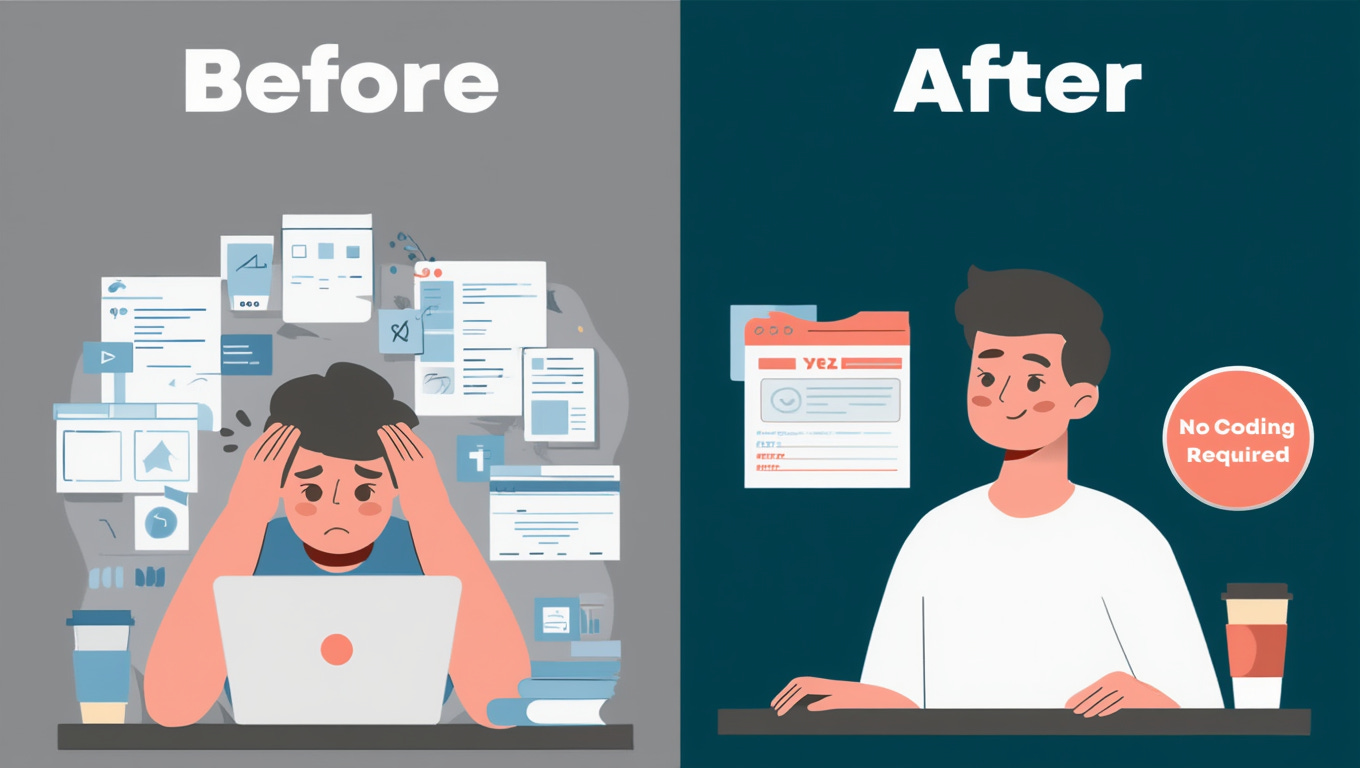
The Wall Between Web AI and Real Workflows
If you’re using AI daily for actual work, you’ve probably hit at least one of these limits:
Session limits that reset your context just when you’re getting somewhere. ChatGPT caps your usage. Claude web resets. You lose hours of carefully built understanding.
Context loss between conversations. Yesterday’s brilliant thread is buried. You can’t reference last week’s work without re-explaining everything. Every session starts from zero.
No file access. The AI can’t read your actual documents. You copy content from files, paste into chat, copy responses back to files. Manual, error-prone, exhausting.
No integration. Your AI tools can’t talk to each other, can’t access your systems, can’t build anything persistent. They’re isolated chat windows, not connected workflows.
Web-based AI is incredible for brainstorming, quick questions, and one-off tasks. But when you try to build actual systems—workflows that save hours every week—you hit the ceiling fast.
What Command-Line AI Unlocks
Command-line tools like Claude Code operate differently. They work with your actual files. They maintain context across days and weeks. They can read, write, and modify documents directly in your projects.
Instead of: “Here’s the article I’m working on [paste 2000 words]... now create social posts”
You do: “Read article.md and create social posts following the instructions in agents/social-media-agent.md”
The AI reads your files, follows saved instructions, writes output to new files. Context persists. The workflow is reusable. Next article? Same command, different file, instant results.
I’ve used this approach to cut content production from 16 hours to under 2 hours. Software development that would take weeks now takes a weekend. Operational workflows that consumed entire days now run in minutes.
But here’s what stops most founders: the terminal feels like a barrier you’re not qualified to cross.
“I’m Not Technical Enough for This”
I hear this constantly. After Workshop 201 (Advanced AI Workflows), CLI unfamiliarity was the #1 common barrier. Founders saw the power, wanted to implement it, but the terminal felt intimidating.
“I’ve never used the command line.” “I’m not a developer.” “What if I break something?”
Here’s what I learned running that workshop: The gap isn’t technical knowledge. It’s confidence. You need to see someone cross the bridge who started where you are.
Most command-line tutorials assume you want to become a developer. They teach you 50 commands, directory structures, shell scripting. No wonder it’s overwhelming.
But for AI workflows? You need about 6 commands. That’s it. Not 50. Six.
You already know the concepts—folders, files, navigation—you just need to see how to do them with words instead of clicks. And you need to build something that works in the first session, so you feel the payoff immediately.
Workshop 101: The Gentle On-Ramp
On January 9 at 1pm Pacific, I’m running a 90-minute workshop designed specifically for founders who:
Currently use ChatGPT, Claude web, or similar AI apps
Hit session limits and context loss regularly
Want to build persistent workflows but CLI feels intimidating
Aren’t developers and don’t want to become one
This isn’t “learn to code.” This is “learn just enough terminal to unlock powerful AI workflows.”
Here’s what we’ll do together:
Part 1: Why bother? (10 min) - I’ll show you exactly what CLI AI unlocks that web AI can’t do. Real examples from my workflows.
Part 2: Choose your project (10 min) - We’ll use web AI to help you pick a good first automation project. Something repetitive, file-based, and immediately useful.
Part 3: Terminal basics (10 min) - The 6 commands you actually need. No theory. Just “here’s how to navigate, create folders, and open Claude Code.”
Part 4: Migration strategy (15 min) - I’ll show you how to move an existing web AI project into CLI without losing your work. This is the bridge from where you are to where you want to be.
Part 5: Build your first agent (15 min) - Together, we’ll build a working AI agent. You’ll write instructions, save them as a file, and run them. By the end, you’ll have automation that works.
Part 6: Q&A (15 min) - Bring your specific questions. We’ll troubleshoot setup issues and map out your next steps.
What You’ll Actually Leave With
This isn’t a watch-and-learn webinar. You’ll do each step with me. By 2:30pm Pacific, you will have:
✅ Claude Code installed on your machine
✅ 6 terminal commands you can use confidently
✅ Your first working agent that reads/writes files
✅ A project plan for your next automation
✅ Setup guide and resources to keep building
And most importantly: The knowledge that you can do this.
The terminal won’t feel like foreign territory anymore. It’ll feel like a tool you know how to use.
Who This Is For (And Who It Isn’t)
This workshop is for you if:
You’re currently using web-based AI regularly
You’ve hit session limits or context loss that frustrates you
You want to build persistent workflows but don’t know where to start
You’re not technical but you’re willing to try
You learn best by doing, with someone showing you each step
This probably isn’t for you if:
You’re already comfortable with terminal and CLI tools
You prefer to stay with web-based AI (that’s valid!)
You’re looking for advanced workflow architecture (that’s Workshop 201)
You want to learn programming or software development
This workshop is specifically designed to be the gentlest possible on-ramp. If the terminal has felt like a barrier, this removes it.
The Details
When: January 9, 2025, 1:00-2:30 PM Pacific (4:00-5:30 PM Eastern)
Where: Live on Luma (link sent after registration)
Price: $25
What’s Included:
90-minute live workshop
Recording (sent within 24 hours)
Resource list and next steps
One week of email support
Prerequisites:
Mac or Linux computer (Windows with WSL works too)
Anthropic Pro (or higher) account ($20/mo)
A project you’d like to automate
Curiosity and willingness to try something new
No experience required with: command line, programming, git, or AI development tools
Common Questions
“What if I get stuck during setup?” We’ll troubleshoot together during the workshop. You’ll also get a setup verification guide beforehand and email support for a week after.
“Can I really build something useful in 90 minutes?” Yes. You’ll build a working agent during the workshop. It’ll be simple—probably something like “read article, create social posts”—but it’ll work, and you’ll understand how to build more.
“What if I can’t make it live?” You’ll get the recording within 24 hours. But the live session is better because you can ask questions and troubleshoot your specific setup in real-time.
Registration Opens Now
Breaking Free from Chat Windows: Your First AI Command Line Project January 9, 2025, 1:00 PM Pacific
[Register here: https://agilito.com/workshops/cli-basics-jan-2025]
The command line doesn’t have to be a barrier. It can be the tool that unlocks your next level of productivity.
You’re already doing the work. Web AI got you started. CLI AI lets you build systems that compound.
90 minutes. Six commands. One working agent.
See you January 9.
—CJ
P.S. - If you’re thinking “I’ll figure this out on my own”—you might (check out the resources from our Advanced AI Workflows webinar to point you in the right direction). But be real about how much getting stuck and having to guess you are really going to do to unlock this power. Or you can spend 90 minutes with someone who started as non-technical, built production workflows, and can show you the shortest path. Your call.